
Tight shoulders until I found the Dolphin Pose
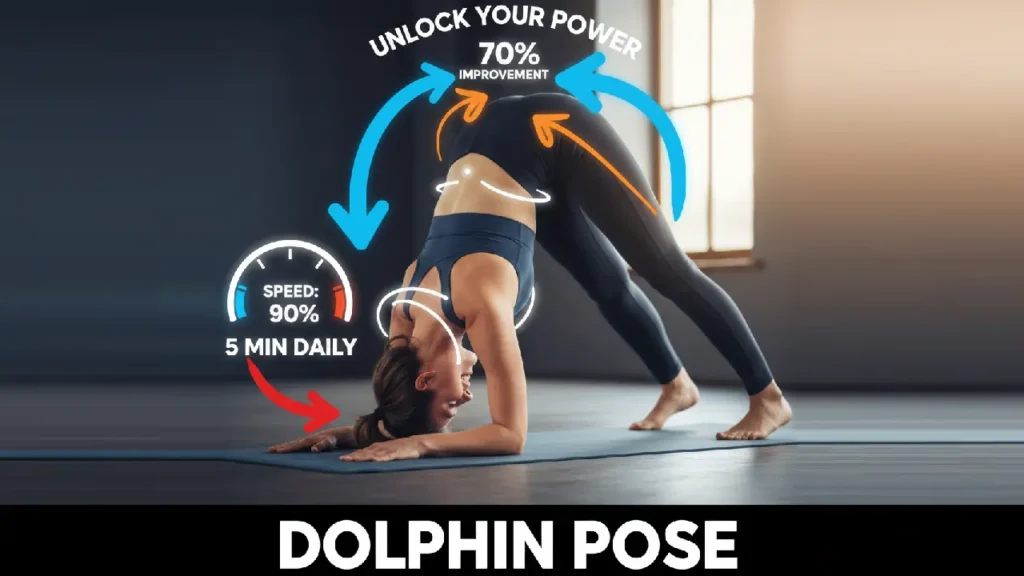
The first occasion I did Dolphin Pose is something I remember. The shoulders were trembling, hamstrings screaming and I was sure I never would get it right. But I kept coming back to it. Why? The reason is that I soon realized Dolphin Pose, known in Sanskrit, Catur Svanasada, is the not so secret tool of developing the basic strength and establishing an unbelievable freedom in my upper body and spine.
It is not just a stepping rock to a headstand, but is a strong pose in itself. In this article, I would like to tell you everything I have learned on my way to this transformative position. I will break down the astounding benefits of it, take you through it step-by-step, and demonstrate how to make it work with your unique body.
What Exactly is Dolphin Pose?
Dolphin Pose, also known as cousin of Downward-Facing Dog, is a base yoga pose that is carried out on the forearms. In my case, the pose was what finally helped break the stiffness of my shoulders which had been produced by decades of bending over a computer screen. It is like an inversion that makes the perfect transition between the easy poses and the more challenging ones such as Headstand.
It strengthens the core and shoulder stability required to have a safe and strong practice by spreading your weight across your forearms. When I am holding Dolphin, the sensation travels all the way to the back of my body and at the same time activates the muscles on my shoulders and my core.
What Makes Dolphin Pose a Non-Negotiable Part of My Routine.
I did not simply fall in love with Dolphin Pose because it was difficult. I became in love with it due to the deep and real gains I began to have. Within a few weeks of regular practice, my body and my yoga practice in general started to change.
Supercharged Shoulder Strength & Stability: This was the most significant change to me. Dolphin made the little muscles of my shoulders open their eyes and grow strong by pushing against my forearms. This was literally translated into improved form in my Planks, Chaturangas and Arm Balances.
Deep Release of a Tight Upper back: This pose, in my case as well as yours, is a gift because I tend to transfer the stress to my neck and shoulders. The position gets your shoulder blades to pull your back thus creating room and relieving that common tension.
Flexibility in Hamstrings and Calf: I have never been able to easily touch my toes. Dolphin Pose offers a profound, passive position of the entire posterior chain. I experience it the most in my calves and hamstrings, and with time my Downward Dog has changed considerably in depth.
A Clear, Concentrated Mind: Dolphin Pose is a gentle inversion, reversing the flow of blood to my brain, bringing fresh oxygen to my brain. Spending one minute in this posture will re-centre me and get me focused when I am feeling disorganized or over-stressed. It is an inspiring meditation to me.
Core Powerhouse Activation: I need to use my core working hard to avoid sinking of the hips. I consider Dolphin as a secret inner-core workout that has provided me with more power than millions of crunches.
My Step-by-Step Approach to the Perfect Dolphin Pose.
I would like to take you through the actual process that I follow each time I enter Dolphin. Go with me now, but do not forget to be patient with your body.
Start on All Fours: This is the same position I start in on my mat, but I am in a tabletop position with my wrists under my shoulders and legs under hips.
Bend to Your Forearms: I put my forearms on the mat with the direct contact of my elbows at the same level as my shoulders. This is an important pillar to stability. I put my forearms down hard, with the knuckles in the floor.
Tuck Your Toes and Lift Your Hips: I am going to curl both my toes and then, exhaling, draw the knees off the mat. I maintain a low stance with bent knees initially- this was one of the major lessons to me so as to safeguard my lower back.
Lengthen Your Spine and Walk Your Feet In: I vigorously press my forearms down and pull my chest slightly back towards my thighs. Then gradually I start moving my feet nearer to my elbows, trying to make some long straight line between the tailbone and the top of my head.
Find Your Expression: In my case, the most desirable pose is when the spine is straight and shoulders are actively swinging back of the ears. I also take 5-10 deep breaths and experience the strength and the stretch.
Adoptions and Hacks of my own practice.
My Dolphin Pose was not quite perfect on the first day, and it is all ok! These are the changes that were of great assistance to me.
In the Case of Tight Shoulders: When your shoulders are extremely tight I would advise that you leave some little bend in the knees. You may also squeeze the sides of your hands together to leave more room between your shoulder blades.
In the case of Wrist Sensitivity: This is what made me start using Dolphin! Your weight is pressuring your forearms, so it is an excellent alternative to Downward-Facing Dog in case you get pains on your wrists.
Application of a block: I occasionally insert a block between my thighs and squeeze it. The trick that I described above helps me work my inner thighs and core more and makes the pose more supported.
Dolphin Plank: In order to strengthen my muscles, I usually move between the Dolphin and Forearm Plank. I inhale as I move forward into a plank, and exhale as I move back into Dolphin. This motion was one of the pillars to my shoulder stability.
My top 10 Picks of how to move Dolphin Pose into a Flow.
Dolphin Pose is very much a jack of all trades. I have many favorite ways of using it in my vinyasa practices.
As a Warm-Up: It is my warm up exercise as a way to warm up my shoulders and core before trying something more challenging such as arm balances or inversions.
During a Core Sequence: I may have Dolphin and hold it a few times and then one leg Dolphin Leg Lift and the same on the other side. This severely puts my stability to test.