
Inner Strength Matyasana
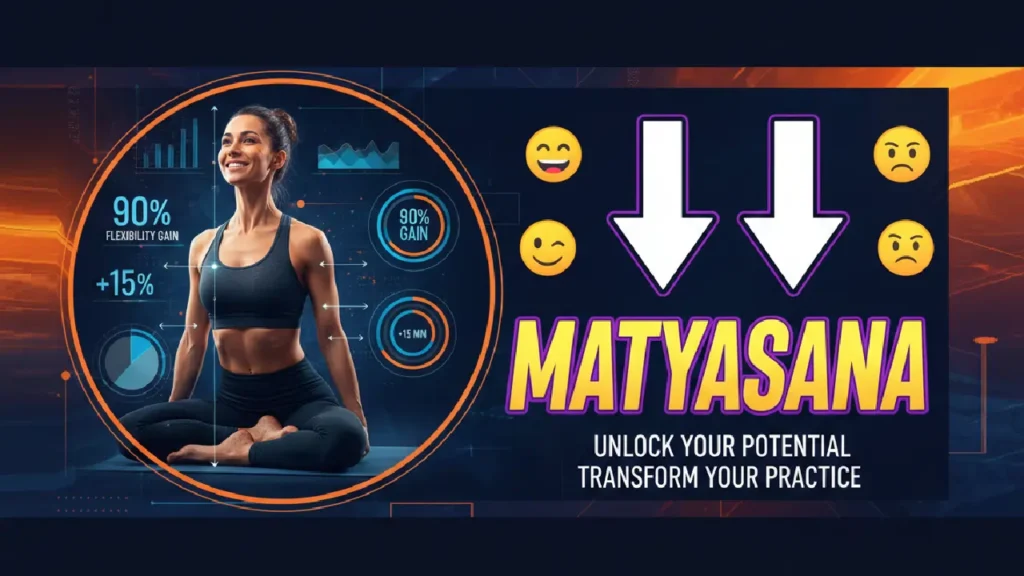
The first time I tried Matyasana I recall. I was stiffening in my back, stiffening in my throat, and beating in my heart. It was not simply a case of a physical pose, I was wrestling with an inner wall. However, what I found on the other side of that conflict altered my habit, and my attitude, permanently. Matyasana or the Fish Pose is not a simple backbend. In my case, it was one of the keys to the access of a deeper feeling of emotional and physical freedom.
In this paper, I would like to tell about my own experience with Matyasana. I will show you its transformative advantage and give you a step-by-step presentation of it so that you can safely enjoy its magic personally. It is not another yoga guide, it is a call to open your heart, both the literal and metaphorical one.
What is Matyasana, Really? Beyond the Basic Backbend
We will hear on numerous yoga books that Matyasana is a chest-opening pose. That, it is, but it is a very shallow truth. Personally, this pose is a strong remedy to the bent over life of the day. Our days are spent hunched on the computers, phones with our shoulders drawn in and our lungs compressed. Matyasana dictates a glorious overturn.
The name itself is evocative. There is the meaning of Matya translated as fish and the last pose is like a fish with his chest puffed and his arched body. I interpret it as a sign of emerging to the surface, of breathing heavily out of a spot of power and weakness. In the pose, as I sit down I am asserting my claim to my world, pushing the ground aside to allow my heart to grow bigger.
What My Practice Could Not Be Complete without Matyasana: The Main Advantages.
I did not even notice what was lacking before I started making Matyasana a daily routine. Its effect is both short-term and long-term. The following are the transformational benefits that I have experienced personally:
Fights Slouching and Tech Neck: It is the most apparent advantage. It is stretching my front part of the body powerfully, my chest, shoulders, throat, and my hip flexors. It will be my relaxation after a long day at my desk to reset my posture.
Opens the Door to Deeper Breathing: This opens the chest and intercostal muscles thereby significantly increasing the capacity of the lungs. My breathing turns to be deeper and more rewarding, and this directly relaxes my nervous system.
Ventsililates Stressed Emotional Energy: To me, this was the greatest surprise. Our heart center is our storage of so much stress and emotion. The naked, hearty posture of Matyasana has given frequent and startling tears and the sense of emancipation. In my case, it is some kind of emotional catharsis.
Trains the Upper Back: It stretches the muscles deep on the front, but it is hard work on the back, actively involving the muscles between my shoulder blades. This has contributed to the improvement of muscular imbalances and eliminated my long-term upper back pain.
Stimulates Thyroid and metabolism: The final pose is the gentle compression of the neck which is thought to stimulate the thyroid gland. Although this is something I have no way of quantifying, I always feel refreshed and energized at the end of my practice.
My Step-by-Step Guide to an Ideal (and safe) Matyasana.
Please, listen to your body. I also got to know the painful lesson that it is straining to make this pose. A folded blanket or a yoga pad to support the upper back is recommended, particularly when you are a beginner.
Lying Down: You can start with lying flat on your back on your mat. Keep your legs straight and your arms in a position parallel with your body, that is, palms on the ground.
Arms: Place your hands, palm down, under your hips. You must have your buttocks lying lazily on the backs of your hands. This is a stable position of the arm, and it supports the lower back.
Hold and Raise: Press your elbows and forearms into the floor. When you breathe in, squeeze your arms and raise your chest, stretching it upwards and bending your spine.
Free the Head Back: It will only be released by lifting the chest high and then bending the crown of your head softly to the floor. Neglect not to pile weight on your neck. Your arms and legs should give the most help.
Find Your Final Form: You have to be open with your chest and arched with your back, and you have to have your head and hips/buttocks (on your hands) on the floor. Breathe deeply here.
To Release: exhalation, push and press with your elbows and lift your head slowly. Slowly bend your upper back, then your mid-back, and then your head to the floor. Counter-stretching: Slide your hands out of the undercarriage and squeeze your knees together in front of your chest.
All the Reasons I Made the Same Mistakes (So You Don’t Have To).
Crying over the Neck: I would strain everything with my head and neck. This is dangerous. Your arms and your core should be strong.
Holding My Breath: The pose can cause you to strain. I deliberately practice slow and deep ujjayi breaths to remain calm and open.
Forgetting My Legs: It is important to have your legs active and engaged. Bend your thighs down and point your toes. This activity cushions your lower back.
Incorporating Matyasana in Your Practice.
I would not suggest to go directly to Matyasana. I will always warm up my body by performing easier backbends such as the Bhujangasana (Cobra Pose) and Setu Bandhasana (Bridge Pose). My dominant applications of it are as a strong counter pose following forward folds and a pre-pose to more in-depth backbends such as Ustrasana (Camel Pose).
Once in my hands I would always do a soft forward bend such as Paschimottanasana to counteract my spine.
My Ultimate Reflection: More Than a Pose.
In my case, Matyasana is a trusting and courage practice. It challenges me to be weak, to open myself even when it is awkward, and to draw strength in that opening. The physical gains cannot be ignored but the real gift is the emotional strength it has inculcated in me.