
How to Meditate at Home (Introduction to Meditation): How to Meditate.
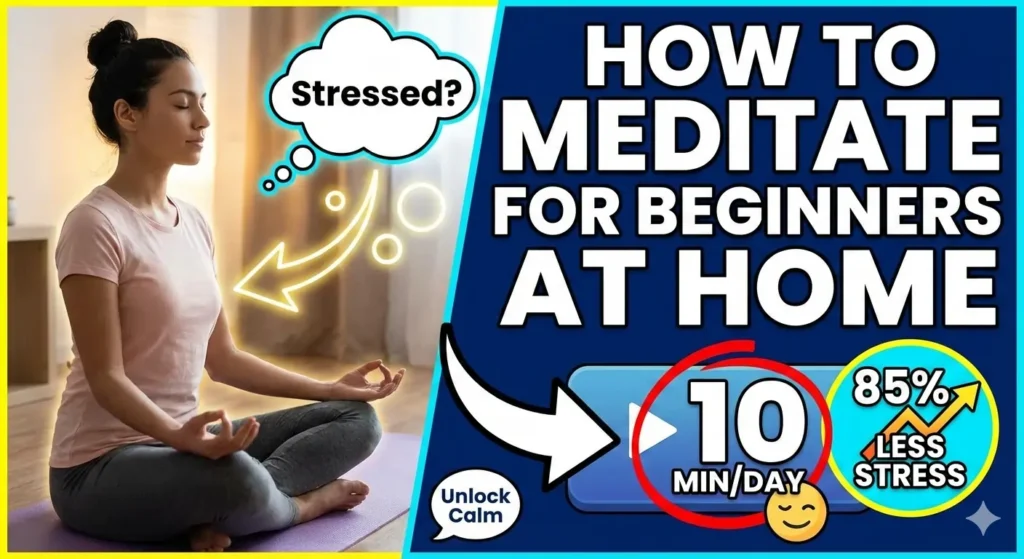
The first thing I did when I went online to find out how to meditate at home was to be overwhelmed. Too many techniques. Too many rules. I used to believe that meditation was the preserve of monks or supremely cool individuals. I was wrong. Meditation is not hard and is convenient and ideal at home. I am going to be telling you in this guide, specifically how I began, what was productive, and how you can create the calm, sustainable practice without stress or confusion.
You do not require any special equipment. There is no need to have hours of free time. All you have to do is to want and some silent minutes.
What Is Meditation and Why It Works as a Beginner.
Meditation can be described as the act of calming the mind. That’s it. I am not making efforts to prevent thinking. I am training to observe them and not respond.
To a beginner at home, meditation assists in the following ways:
Reducing stress and anxiety
Improving focus and clarity
Benefiting the emotional equilibrium.
Improving sleep quality
Building an atmosphere of inner peace.
Awareness was the greatest advantage that I saw at the outset. I reacted less. I breathed more. Life felt lighter.
The Guide to Meditation at Home: Step by Step.
This is the very novice way which I still practice.
Choose a Quiet Spot at Home
I want a quiet spot where I will not be bothered. It need not be noisy, but only quiet.
Good options include:
A bedroom corner
A sofa
A chair near a window
A clean floor with a mat
It is better to have consistency than perfection.
Seat Comfortably (No Fancy Poses Necessary)
I am seated in a manner that I consider comfortable.
Options include:
Sitting in a chair with feet extended.
Seated on the ground in cross-legged position.
Sitting on a cushion
Keep the spine straight (but not rigid). Comfort helps focus.
Set a Short Time Limit
For beginners, less is more. I started with just 5 minutes.
Recommended times:
Beginners: 5 minutes
After one week: 7-10 minutes
Long-term: 10-20 minutes
A timer eliminates the desire to glare at the clock.
Focus on the Breath
Breathing is my anchor.
I do this:
Breathe in through the nose
Breathe out slowly
Notice the air moving
I bring my mind back to my breath when it goes off. No judgment.
Let Thoughts Come and Go
Thoughts will appear. That’s normal.
I don’t fight them. I:
Notice the thought
Label it “thinking”
Return to breathing
This is the real practice.
How to Meditate at Home Beginner Easy Meditation Not Frustrating.
Frustration is common. I felt it too.
The following were the things that kept me going:
I ceased wanting to relax at once.
I also managed meditation as exercise.
I showed up even on bad days
I told myself that wandering minds are a norm.
At the beginning, progress is inconspicuous. That’s okay.
The Best Time to Meditate at Home- beginners.
It does not have an ideal time but it does not work well without consistency.
Popular amateur hours are:
Morning for clarity
Afternoon for stress relief
Night for better sleep
I like mornings since I feel fresher in my mind. Experiment with the timing and find out what suits your schedule.
Top Ten Newbie Piloting Errors (And How I Corrected My Pilot Mistakes).
Trying Too Hard
The art of meditation is not about coercing.
Expecting No Thoughts
Thoughts don’t mean failure. They mean awareness.
Skipping Days
Shorthand sessions that occur daily are superior to infrequent sessions.
Comparing Progress
My meditation experience is a personal one. Yours is too.
How to do Simple Meditation Variations at Home: Beginners.
As soon as I was at ease, I went soft.
Guided Meditation
Good in building and self-esteem.
Body Scan Meditation
I gradually become aware of my feelings.
Mantra Meditation
It can be beneficial to repeat some calm word.
Mindful Breathing
Breathing counts the time to have the mind steady.
Start simple. Explore later.
The Question of How Long It Takes to Learn Meditation?
I observed the improvements in a week.
Typical beginner timeline:
Day 1-3: Restlessness
Week 1: Awareness improves
Week 2-3: Improved emotional management.
Month 1: Noticeable calm
It is a gradual process of meditating. Trust the process.
Ten Easy Ways to Make a Daily Meditation Routine at Home.
Everything for me was different with consistency.
Helpful habits:
This is by meditating at the same time in a day.
Combine it with an already established habit.
Track sessions on a calendar
Be realistic with expectations.
Five minutes a day would make a difference in your life.
The Case of Why Meditation at Home Is Ideal to Start.
Pressure is eliminated by home meditation.
Benefits include:
Privacy
Comfort
Flexibility
Zero cost
I was taught that meditation does not involve escaping. It works right where I am.
Likert shortcuts: Quick Start Checklist.
Sit comfortably
Set a 5-minute timer
Focus on breathing
Let thoughts pass
Practice daily
That’s all you need to begin.
How to Meditate at Home: FAQ on How to Meditate.
Is it possible that beginners can meditate at home?
Yes. My beginning was at home with no experience, and the results were soon to be seen.
Do I need complete silence?
No. Soft background music is alright.
What if I fall asleep?
It happens. Attempt sitting in an upright position or meditating before.
Is meditation religious?
No. It is not a mental system, but a mental practice.
What is the frequency of meditation among the beginners?
Every day, even 5 minutes.
Final Thoughts
Another way to learn to meditate as a beginner at home has transformed my reaction to stress, thoughts, and feelings. I am no longer seeking perfection. I appear, breathe, start all over. If I can do it, so can you. Start today. Five minutes is enough.