
Best Journey Paschimottanasana
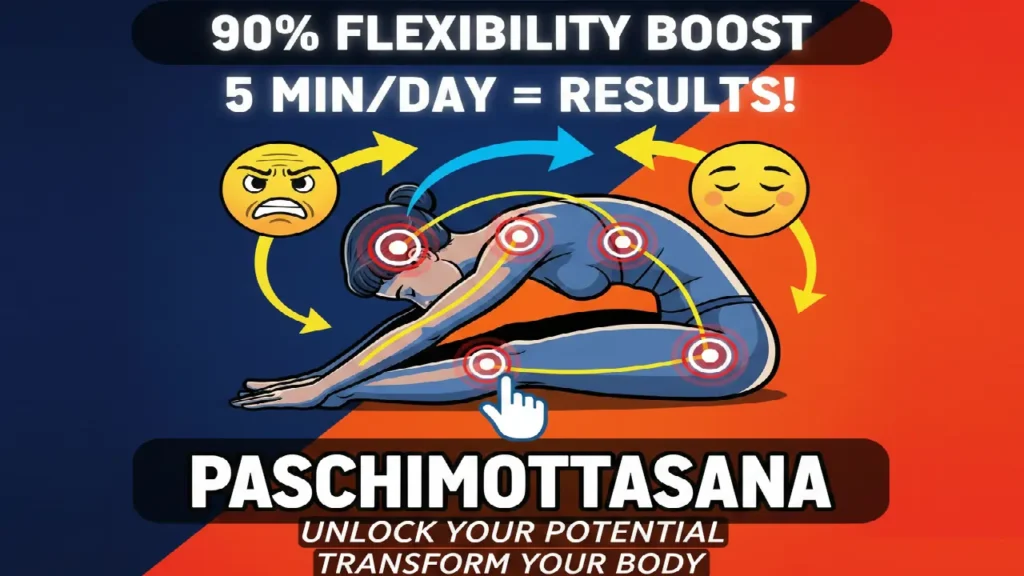
I would gaze and stare at the yogis in intense forward bends with awe and frustration. My hamstringes were taut as guitar strings, and I could barely imagine not having them touched. This was prior to me devoting myself to the study and practice of Paschimottanasana.
This is the seated forward bend, the name of which I could hardly pronounce, and the lesson I got out of it was my highest lesson in patience, release, and self-discovery. It is not only a stretch but also a complete body and mind experience. I would like to tell you how I came to know how to adopt this mighty posture and how you can as well.
So What is Paschimottanasana?
One of the basic yoga postures is Paschimottanasana, which is also known as the Seated Forward Bend. Its name comes from Sanskrit:
Paschima or West, the back of the body.
Uttana, which translates to intensive stretch.
“Asana” meaning “pose”
The west in yogic tradition is a representation of the whole backside of the body- your heels to the top of your head. Paschimottanasana is, therefore, quite literally, a severe stretch of the whole posterior chain. In my case it was the key to all between my calves and my neck.
The Benefits of Why I Fell in Love with Paschimottanasana.
I could only touch my toes to begin with. However, soon I came to understand that this asana offered much more than my hamstrings did. This is what a regular practice did to me:
Revolutionized My Flexibility: The most evident advantage is this one. The hamstring, calves, and glutes slowly slackened their chronic tension.
Relaxed My nervous System: The forward-folding movement is relaxing in nature. My breath went deeper and my levels of anxiety were greatly reduced with each practice.
Better My Posture: Lengthening my spine and getting the tension out of the back, I began standing and sitting taller without even thinking about it.
Massaged My Organs: The rubbing in the stomach stimulates the digestive organs which worked wonders on my digestion.
Became My Moving Meditation: Pose taught me how to sit with pain without creating a judgment about it, which directly translated into my day-to-day life.
My Step-by-step Guide to the Safest Paschimottanasana.
It was costly to me to discover that persisting with this pose is only going to result into possible injury. The following is the soft, effective method that has eventually paid off with me.
Setting Up for Success
I begin sitting on my mat with my legs straight facing in front of me. I ensure that my sitting bones are grounded and long spine. I usually have a folded blanket as a cushion beneath my hips so that I can tilt my pelvis forward–it was a game changer at the very beginning.
The Journey Into the Pose
Move Your Legs: I really flex my feet, drawing my toes in behind my shins, and pressing my thighs down. This activity helps to guard my hamstrings.
Inhale to Lengthen: This is done as I inhale, and bring my chest to expand and raise my arms as high as possible in my spine.
Exhale to Fold: On a long exhale, I start hinging forward out of my hips and not my waist. I am a headlong leader.
Find Your Edge: I only go as far as my spine allows me to go. My back is flat, not rounded. I may make my shins, or ankle, or feet–where I can make my body do.
Breathe and Surrender: I stand in the pose 5-10 deep breaths. I make myself relax each time I breathe out.
Top Ten Things I Learned the Hard Way.
In retrospect, I was not making much progress due to the following mistakes:
Rounding My Spine: I was too preoccupied with getting my head towards my knees that I made a C-shape in my back. This puts a strain on the back and serves no purpose to the hamstrings.
Holding My Breath: The anxiety caused me to strain and lose the ability to breathe. The most effective release tool is the breath.
Forcing It with My Arms: I would drag myself down using my arms and it did not help in tightening my shoulders and neck.
Changes that Worked Miraculously to My Advantage.
Yoga does not deal with the end image. It is finding what is right to your body. The following were my best friends:
Use a Strap: In case my hamstrings were exceptionally tight, I used a strap and went around the feet and grabbed each end. This let me keep my spine long.
Bend Your Knees: The most necessary change is this one. Small folds in the knees cushion the lower back and permit an appropriate hinge of the hips.
Support your head: placing a block or a folded blanket on my shins and laying my forehead on it was so pleasant and it helped my nervous system to calm down completely.
Paschimottanasana in My Daily Life.
To enjoy the fruits, I do not necessarily have to spend 90 minutes in practice. I also tend to use a few minutes of Paschimottanasana either in the morning to wake up the body or in the evening to get rid of the stress of the day. It’s my go-to reset button.
People often ask questions and frequently need answers
Q: I have a back injury. Is it possible to practice Paschimottanasana?
A: First of all, you need to consider talking to your doctor or a professional yoga therapist. Forward bends may worsen some back problems. They will instruct you on safe alterations or other poses.
Q: What is the time it is going to take me to touch my toes?
A: This varies for everyone! I was forced to abandon this objective altogether. My flexibility came up automatically when I concentrated on the sensation of the stretch and not the destination. Fidelity, rather than intensity, is more significant.
P: I experience acute pain in the back of my knee. What should I do?
A: Stop immediately. When your body tells you to stop, it is a sharp pain. This is usually an indication that you are overworking. A slight bending of the knees; it is necessary to pay attention to the straightening of the spine instead of bending.