
Pranayama Yoga Instant Relaxation..
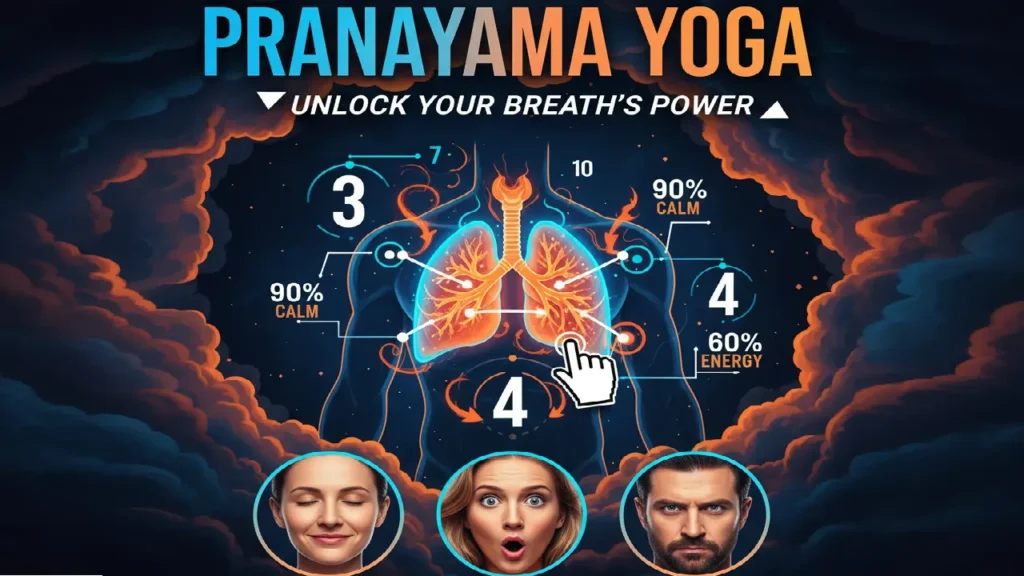
I believed calm to be something that other people discovered. It was as though my mind is an internet browser that has too many tabs open and my stress was almost a constant, low-level hum. After that, I learned pranayama yoga. This prehistoric technique of breathing did not at first change my nervous system dramatically, and yet it did so without any noise.
This is the article where I would like to tell you what I have learned during my way. I will also unravel precisely what pranayama is, what makes it so effective, and I will provide you with the simplest methods that you can put into practice in this very moment to help yourself experience your own state of calmness.
Pranayama is much more than breathing exercises. In my experience, it is the breathing that is conscious and deliberate. It is the translation of the Sanskrit word Prana: life force or life energy, and Yama: control or extension. Pranayama yoga is then the process of extending and controlling our life force by way of breath. In my case, it was the key that I needed to bridge the gap between a hectic body yoga session and a real silent mind.
What I Learned: It’s Not That Simple, to Take a Deep Breath.
My initial experience of pranayama was that I believed that I knew how to breathe. I was alive, wasn’t I? I was a typical chest breather, however, breathing in short shallow gulps of air which had maintained my body in a state of low grade panic. My teacher told me that the nervous system of the body is directly indicated by the way we breathe.
Brief and jerky breathing informs the brain: “Something wrong! Stimulate the fight-off system (sympathetic nervous system).
Slow, long, slow breathing informs the brain: “Everything is ok. Rest, digest and heal (parasympathetic nervous system).
Pranayama yoga equipped me with tools to automatically change to the state of peace after being in panic mode. I was able to discover my own control panel.
Why my Pranayama Practice is Non-Negotiable.
The advantages that I have got personally are the reason I lay my mat every morning, even five minutes. It is not just a theory to me, but a part of my reality.
My Anxiety Melted Away
The practice that I meditate with to quickly gain some relaxation is Nadi Shodhana, or Alternate Nostril Breathing. I sit and do this in three minutes when I find my heart beginning to race with anxiety. It is a way of balancing the left and right hemisphere of my brain and this gives me a feeling of equilibrium which I never experienced by merely telling myself to relax.
I Discovered a Natural Energy Boost.
The third cup of coffee is forgotten. During the afternoon, when I feel a drop in energy, I do Kapalabhati (Skull Shining Breath) a minute. This quick, bouncy breathing gets my blood going and oxygenated my system making me alert and revitalized without the nervousness that comes with caffeine.
My Focus Became Laser-Sharp
Seated in a place to work was a struggle to be distracted. I now begin my deep workouts by doing a couple of rounds of Box Breathing (inhale 4 counts, hold 4, exhale 4, hold 4). It is a simple practice that makes me, firstly, focus my mind, and, secondly, bring my attention inward, rendering me much more productive.
I really identified with my body.
Practicing yoga was primarily physical before pranayama. The lesson to breathe mindfully taught me to pay attention to the murmurs of my body. I was able to perceive my areas of tension and how to breathe myself out of it.
Today, My Pranayama To a Beginner.
Special equipment is not necessary. All one requires is several silent minutes and the desire to attempt. The following are the methods that comprised my practice.
The Diaphragmatic Breathing: My Essentials.
It is at this point that all should begin. I do it lying down with one hand on the chest and another on the belly.
Take your breath in slow and deep through your nose, as you feel your belly swell.
Breath out, you can feel your belly sinking.
Your hand on the chest is to be kept fairly still.
I repeat this 2-5 minutes concentrating on the rhythm.
Nadi Shodhana: Momentary Equilibrium.
It is my number one stress favorite.
Sit comfortably. Close your right nostril with your right thumb.
Breath in via the left nostril.
Close the right ring finger with the left nostril, release the thumb and breath out through the right nostril.
Breath in right nostril and then close it, open the left and then exhale through the left.
This completes one round. I do 5-10 rounds.
Ujjayi Breath: The Sound of the Ocean.
This is the foundation of majority of Vinyasa yoga classes. I apply it in my physical practice.
You have to narrow the throat, as though you were fogging a mirror.
Breath in and out using the nose keeping this slight constriction.
It must be a whispering in the ocean. It assists me in taking a grip on my present.
What I Need to Know Before You Start: My Safety Essentials.
Pranayama is powerful. Please listen to your body.
You must always breathe through your nose unless otherwise stated in the technique.
Never force your breath. When you get dizzy then pause and resume your usual breathing and rest.
In case you are pregnant or are high blood pressure or have any respiratory or heart problems, then you should seek consultation with a physician or an experienced teacher before attempting any techniques, such as breath retention (Kumbhaka) or Kapalabhati.
Start small. Three minutes a day will be a mighty beginning. It is more of consistency than time.
My Last Word Your Breath is everything.
Pranayama yoga enabled me to have a superpower to use at any time or place. Stuck in traffic? I can do Nadi Shodhana. Anxious before a meeting? One minute of Box Breathing makes me feel better. The most convenient essential to health I have ever encountered is it.
I am in process of the breath, and my daily practice is educating me on the importance of stillness, strength, and the ability of my inner self to be at peace. It is your first, conscious breath, so I would suggest to you to take that and see where it leads.