
My Siddhasana Secrets
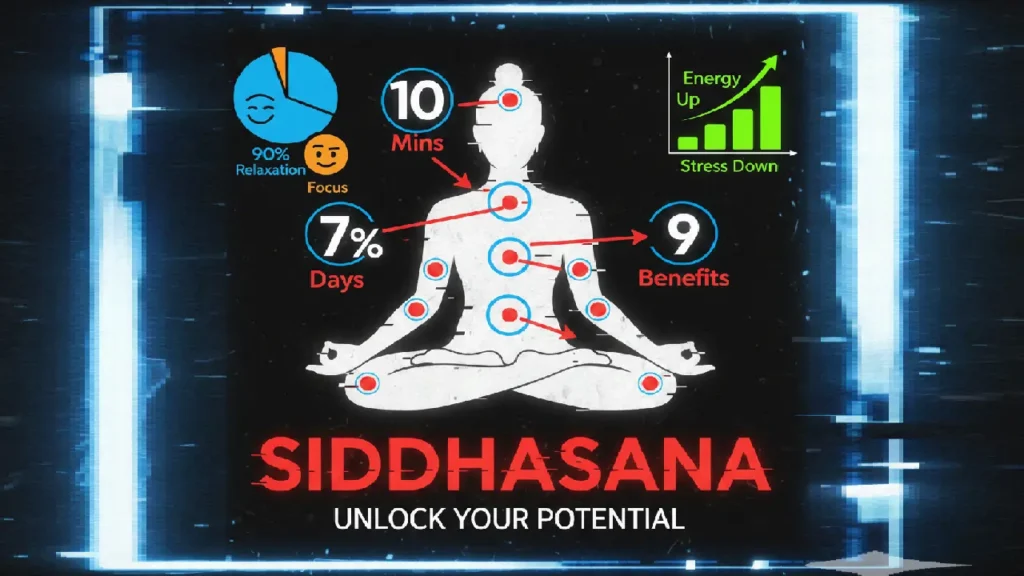
I tell the truth: in the process of meditation, I fought against my body. My will was ready, but my knees were sore, my back was aching, and my ankles were screaming after a few minutes. I took longer to sit down, and even longer to adjust my position and squirm in pain than to calm my mind. I was about to quit in the belief that I have a body that is not meant to sit.
It is then that a teacher brought me to the Siddhasana, the Pose of the Siddhas or Pose of the Adept, which is also called the Pose of the Accomplished. This one posture is not the only seated Buddha-like pose that did not only transform my practice but also transformed my whole relationship to meditation. I would like to tell you why this asana is so much more than sitting cross-legged.
What is a Siddhasana and Why Has It Reduced me to a New Person?
Siddhasana is a seat that is the oldest and the most venerated seated yoga pose. It is named after the Sanskrit word Siddha which translates to accomplished or perfected being, and Asana which translates to seat or pose. The seat of the Siddhas-the wise yogis who have gained spiritual forces is traditionally believed to be it.
In my case, its magic is that it is a good combination of physical stability and an active position. Siddhasana is a closed system in the body unlike sitting on a cushion. It is by so positioning the heels that one can efficiently trap the vital energy (prana) and therefore it is prevented to dissipate, but instead flows inward along the spine.
This was the “aha!” moment for me. I was not only sitting but I was holding myself in my concentration and my meditation sessions became extremely deep and focused at the very first attempt.
The Diffusion of Benefits I received as a result of Siddhasana.
The theory has beauty, but what has kept me a devotee all my life is the earthly fruits of it. This is what this daily practice of Siddhasana did to me:
Stable Physical Stability: The pose provides a spacious, stable foundation that supports your legs immovably to the floor. My body stopped aching in the back as my pelvis was inclined in a forward position to enable the stacking of my spine naturally to form a tall and regal posture.
A Mind without a Care, Anywhere: The spiritual calmness of the body is the direct reflection of the calmness of the mind. The absence of the necessity to squirm and re-injure oneself helped my mind relax considerably faster. It was as though my body were informing my brain, that we are safe, we are grounded, it is time to relax.
Energetic Awakening: This was the least expected advantage in my case. Siddhasana is famous in that it activates Muladhara (Root) and Svadhishthana (Sacral) Chakras. I also had a real feeling of being rooted and emotionally stable. Moreover, the soft perineal stimulation is also used to awaken the inert spiritual force called Kundalini.
Better Flexibility (With Time): At the beginning of my practice, my hips were very tight. Through regular and mild exercises, I felt a great improvement in the flexibility of my hips, knees and ankles. Patience is the key and the next point is the use of props.
The Couch I Use to Sit on: A Step-by-step Tutorial on a Siddhasana.
Don’t be intimidated! This is the precise method that I use to locate my ideal Siddhasana. Keep in mind that my right side may be yours left one and vice versa, so pay attention to your body.
Star Simple: Sit on the floor with your straight legs in a straight position before you. I prefer doing it on a yoga pad to provide additional cushion.
Bend the First Knee: Commonsense This is a gentle action that involves bending the left knee and drawing the left heel towards your perineum, the soft area between your genitals and anus. Your left foot will be placed upon your right thigh.
Bend the Second Knee: At this point bend your right knee and then put the right foot over the left ankle, with the ankle of the right foot being on top of the ankle of the left foot. Into the hollow between the left thigh and calf tuck the right toes.
Locate the Heel Lock: This is the most important so that your right heel is directly over the left heel, the heels being in a vertical relationship with each other, the right heel slightly pressing into the left one. Such a lock is the key to the dynamic impression of the pose.
Extend Your Lengthen: This is the most important. Lay your hands on your knees, straighten your shoulders, and pretend that there is a rope attached to the top of your head and that it is raised towards the ceiling. I am working on lengthening the lower back so that I do not slouch.
My Best Practices to a comfortable and sustainable practice.
I am not a contortionist, and I discovered the lesson the hard way that straining the pose results in injury. This is a practical suggestion on how to make Siddhasana functional on your body.
Sit Proplessly: In the first year, I used to sit on a hard meditation cushion (or tightly folded blanket). Raising your hips is a lifesaver- the strain is removed in the knees and your spine can remain erect with no effort.
Alternate Your Legs: It is essential not to forget to change the leg on the top and on the bottom. I sit half of the time in one way and then, when I please, I will change to sit with a switch. This provides stability in flexibility and flow of energy.
Listen to Your Knees and Ankles: You have a sharp pang in your knees, you feel like shooting a bullet up your back, stand back. It is one thing to feel uncomfortable but when pain strikes,, it is a warning. The aim is to make a serious and yet mild extension.
Small Steps: I started with two minutes in the pose. I developed my tolerance gradually by weeks and months. The secret of mastery lies in consistency rather than marathon sessions.
Is Siddhasana Right for You? A Quick Check
Siddhasana can be of absolutely tremendous use, but not under all circumstances. You should ensure you consult a professional or a professional yoga teacher before trying it in case you have a serious knee, hip, or ankle injury. To most of them, a less complicated cross-legged pose such as Sukhasana, is an ideal beginning.