
The Ultimate Trikonasana Guide
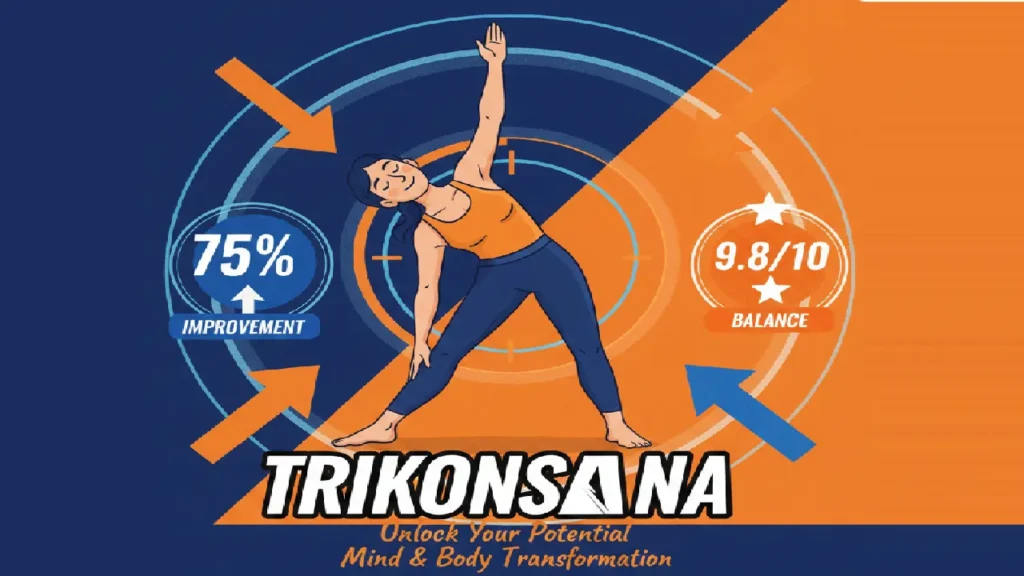
I recall the first instance that I did Trikonasana or Triangle Pose. This was an elegant and expansive position my yoga teacher moved the rest of the class into which left me with equal feelings of awe and frustration. I could not get my hamstrings relaxed, my balance inexplicably wobbly, and I certainly could not figure out the geometry of it. But there was something in the attitudes–this mixture of command and submission–that appealed to me.
I transformed it into my mission to go beyond mastering Trikonasana to knowing its magic. Today, I can tell with certainty that this pose alone has proven to be one of the most transformative in all my years of practice in the field of yoga. It is not just a stretch but a poignant meditation that becomes a strength beginning with the ground up. I will take you through everything that I have learned so that you can see how amazing its power is.
What is Trikonasra, and Why Did It Change my Practice?
Trikonasana Hatha yoga basic standing pose has its Sanskrit meaning of triangle (trikona) and posture (asana). It appears to be an ordinary lateral bend. However, internally, it is a conversation of the body. In my case, Trikonasana has turned into my pose that has helped me to understand the fine lines between hard work and relaxation.
It revealed to me areas that I was doing well and, more likely, places where I was experiencing tension and fear. There was no need to unlock its layers, I became more flexible and more mindful and aware of my body on and off the mat.
The Benefits of Trikonasra that I received in my life that changed my life.
I was always able to achieve the results of my commitment to practicing Trikonasana in my everyday life. The advantages are all-inclusive that reaches to your soul.
Physical Strength and Stability: This is a powerhouse that is used to develop functional strength. It uses your core, glutes, and quadriceps actively, which stabilize your foundation to protect your knees and lower back. I observed that my general leg strength had greatly improved, and I am now able to remain steady when performing other tasks.
Unimaginable Flexibility: Trikonasana gives a profound, wise extension to muscles that are tight due to sitting. I was experiencing a deep release of the hamstrings, hips, groin, and even my chest and shoulders. This openness relieved the stiffness of the lower back that I had.
Greater Digestion and Engagement of the Core: The twisting movement in the pose rubs the organs in your abdomen. This I found both gave my digestion a kind of kick in the pants, and produced a toning influence upon all my mid section, much more so than any crunch could.
Mental Calm and Focus: This came as the biggest surprise to me. To sustain the position, one has to focus on breathing and posture. This one-pointed concentration turned into a kind of moving meditative practice that simply settled my busy mind and lowered my stress levels. The feeling of chest expansion also contributed to making me feel freer and less bound by everyday concerns.
My Step-by-Step Guide to a Perfect Trikonasana.
Follow along with me. I will put it in the sectioned form that my favorite teacher did to me, with clues that would eventually result in it clicking.
Start Strong: This is where you start at the top in Tadasana (Mountain Pose) in the center of your mat. Make a strong step backwards, some 3.5 to 4 feet, with your right foot. Rotate your right toes by 90 degrees (Clockwise) and turn your left foot slightly.
Ground and Energize: Push carefully with both feet, using the muscles of the thigh. On inhalation, extend the arms to a “T” shape with the shoulder height. Get that electricity in your fingertips.
The Initiation: With an exhale, start bending your hips to the left, reaching out to your torso to the right. This is the most important step because it will avoid a clumsy fall and maintain the spine long.
Find Your Edge: Place your right hand down on your shin, ankle, or a block on the outside of your right foot. It is not about reaching the floor, but about maintaining or keeping the torso long and the chest open. I am always saying to myself, Length before depth.
Final Position: Reach your left arm to the ceiling in a straight but piled right on the left shoulder with the right one. Look slightly to your left thumb, if that is safe to your neck. Both legs straight and active.
Breath and Hold: Remain in the position and take 5-10 deep breaths. Experience the enlargement with each breath in and the discharge with each breath out.
Exit with Control: Pressing hard with your feet, use the core to propel and inhale to push your torso back to straight. Put the arms down and do the same on the left.
The 3 Most Common Errors I Accomplished in Trikonasana
It was important to learn through my mistakes. The following are the pitfalls that I constantly fell into and how you can avoid them.
Mistake 1: The Collapsing Hip. I would collapse my waistline and push my upper hip forward. This undermines the sincerity of the pose.
My Fix: Pay attention to having your hips and chest as well as possible to the side wall. Imagine you are sandwiched in between a pair of panes of glass in your torso.
Error 2: Front Knee Locking. I would hyperextend my anterior knee and expose it to danger.
My Solution: Have a little micro-bend on the front knee and work hard to raise the kneecap by using the quadriceps. This brings about dynamic stability.
Error 3: Fine Tilting to the Bottom Hand. My shoulder and neck would be compressed as I would put all the weight on my lower hand.
My Fix: Use a yoga block! This was a game-changer for me. It takes the floor to you and means that you can retain space in your neck and shoulders and concentrate on torso rotation.
Adjusting Your Trikonasra to Your own Body.
Yoga belongs to all humans and Trikonasana is not an exception. Don’t force anything. Here’s how I learned to adapt.
In Case Your Hamstrings are Tight: Have a block under your bottom hand, put on its highest level. This played a critical role to me initially.
In case You have Lower Back Concerns: It is best to practice with the back heel tight to the wall. It gives stability and feedback.