
Salamba Sirsasana My Journey
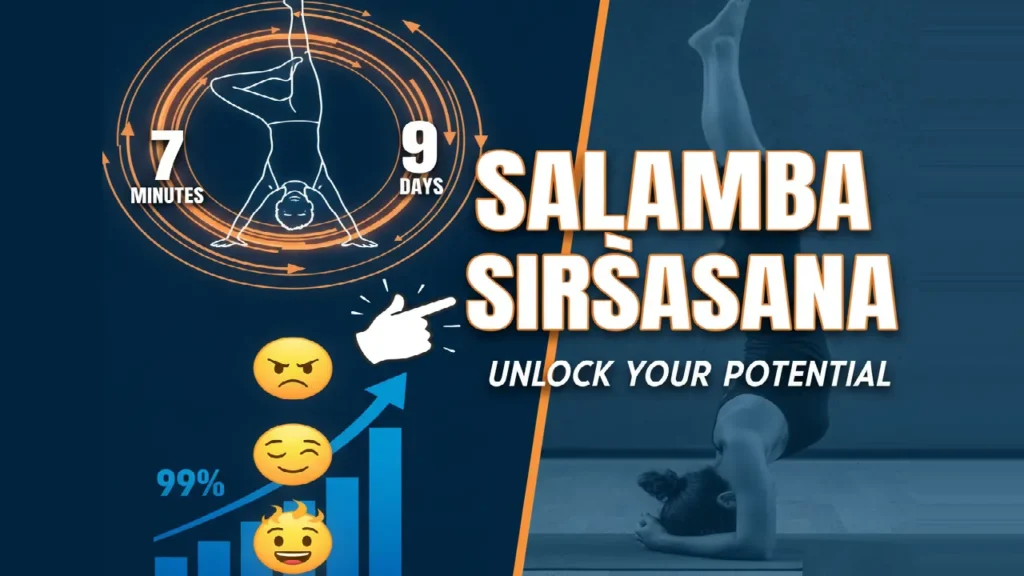
I also will never forget the time when I first grasped Salamba Sirsasana. I was as excited as my heart could be, not of fear, but because it was sheer exhilaration. I perceived years ago, this supported headstand as the most hard to reach, and the most advanced, flexible gurus only. I was wrong. Salamba Sirsasana was my safe haven, my personal reboot button on hectic days with patience and the appropriate attitude. It is not simply a yoga posture, it is a change of attitude – both a literal and metaphorical one.
In this paper, I would like to take you through my process. I am going to give the exact steps I used to develop the strength and confidence, the deep-seated benefits I gained first hand and the key mistakes that I made so you do not repeat them. It is time to demystify this iconic pose.
Introduction What is Salamba Sirsasana, Really?
We will penetrate through the Sanskrit. Salamba – meaning with support
and Sirsasana – meaning headstand. Therefore, in contrast to its more sophisticated, unassisted version, Salamba Sirsasana requires your forearms and hands to make your head rest on a stable tripod. This support is everything. This is what makes this pose available and approachable to students such as me who are not necessarily endowed with gymnastic abilities.
Once I came to realize that my head should hardly be supporting anything, the whole pose made sense to me. It is not your top, but your forearms and the top of your head upon which you have to rely. This was the first major key that opened the door to me.
The Benefits of Turning Salamba Sirsasana into My Mission: Why I Did.
I was not trying to use this pose to get Instagram likes. I was also attracted by the benefits promised and they are quite real now.
Clarity of the mind and Reduction of stress: Turning my body upside down brings an immediate feeling of tranquility. The blood in my brain is a kind of soft reset to my nervous system. Five minutes in this position clears my stress after a tedious day.
Better Circulation and Lymphatic Drainage: Gravity is reversed giving my heart a moment off and letting fresh blood with oxygen easily flow to my face and brain. I also feel bolder and livelier.
Core and Upper Body Strength: This was the most physical change to me. Suspense with my hands upside down had my core, shoulders and back pulling together. My sitting position on the floor was enhanced.
An Enhancement of Confidence: Overcoming a fear position is an empowerment. The moment I kicked up and regained my balance I had a fantastic rush of self-belief that spilled over into other parts of my life.
My Two-step Blueprint to Salamba Sirsasana.
Do not, pray, kick your legs up against a wall. I made a mistake of taking it step by step. The following is the stepwise process that I have followed.
Introduction to Foundation First: Building your Base.
My travel started on the floor and not in the air. The setup is 90% of the pose.
Kneel on your mat. Close your fingers together, making sure that the knuckles of your pinkies are stuck together. Forearms are to be parallel and the shoulders pointed directly under the elbows. This forms the foundation of your tripod, which is very stable and cannot be moved.
Place the crown of your head. Tuck your head on the floor, and hold the back of your skull with your cupled hands. The point is to get the much best of it, the best of your head, on the ground, not on your forehead or on the back of your head.
Lift your hips. Bring your toes in, straighten the legs and walk your feet up towards your face. Thou shalt find thy spine lengthening And thy shoulders drawing down thy ears. This is the dreadful Dolphin pose preparation.
Liftoff: Finding Control with Flight.
This is the moment of truth. It is core engagement and not a soccer kick.
Engage your core. Pull your belly button inwards. In an exhale, bring both knees towards your chest and get into a tucked up position. It took me weeks to get even to thinking of straightening my legs with this tuck.
Slowly extend upward. When you are confident that you are in a stable tuck, you can start straightening your hips and legs against the ceiling. Suppose you are stamping your feet upwards.
Find your balance. Your eyes are to be gentle, and stare at the area between your hands. Maintain your core and hold your breath constant. Don’t hold your breath!
Coming Down Safely: The Most Significant Part.
The pose is as vital to quit as to get into it. Never collapse down.
On a sigh, undo your footsteps. Involving the central part of the body, pull your knees into your chest and gradually bring your feet down to the ground.
I will always take a few breaths in the Child Pose. This will enable my blood pressure to stabilize and will give me a time to adjust to the effects.
Mistakes I made (So You Don’t Have To).
Kicking Up: My initial and the largest mistake was momentum. This jerks your neck and balance is hardly a possibility. The exercise must be a slow, steady press.
Sinking into My Shoulders: I hunch my shoulders inrespective of my ears which resulted in straining my neck. The remedy was to vigorously press my forearms downwards and draw my shoulders off the floor.
Arching My Back: I did not notice that my core was not in place, which formed a dangerous banana-shaped bend. The solution was to always pull my lower ribs in and use my glutes to ensure that my body was straight.
Am I safe in Salamba Sirsasana?
On the one hand, this is incredibly beneficial, but this pose is not suitable to all. I would highly recommend that you visit a doctor and a trained yoga instructor in the event that you possess any of the following:
Neck or back injuries
High or low blood pressure
Heart conditions
Eye pressure problems or glaucoma.
Pre-natal (during your second or even third trimester)?